


IN THE SPOTLIGHT

Somatic Therapy for Executive Burnout: Reading the Body That Will Not Slow Down
The executive in the chair says the quarter went well. Her shoulders are up near her ears, her breath sits high in her chest, and her jaw is working on something she has not said. This is a composite, drawn from patterns common in work with executives, not a single person. For many high achievers, the body is the first honest report in the room, and the last one anyone has asked to hear.
Somatic clinicians know this already. What I want to offer here is a closer look at how this plays out with people whose job is to override discomfort and keep delivering, and a few ways of working that have helped me stay useful to them.
THOUGHTS IN MOTION WITH ELYA STEINBERG, M.D.
When The Past Floods The Present: Regression, Flashbacks, and the Art of Coming Home
When the Past Floods the Present: Regression, Flashbacks, and the Art of Coming Home
The Moment the Room Changes
You are sitting with a couple. The...
YOUTUBE VIDEOS OF INTEREST
YOUTUBE VIDEOS

YouTube offers informative videos covering a wide range in the fields of Somatic Psychology and Body Psychotherapy. SPT Magazine offers videos our editorial team feels are aligned with our mission.
As part of the Creating a Compassionate World interview series, Professor Paul Gilbert OBE, President of the Compassionate Mind Foundation (compassionatemind.co.uk) discusses compassionate communities with Dr Julian Abel (www.compassionate-communitiesuk.co.uk)
To read Dr Kellehear’s new book, Well-Being at the End of Life: Reimagining Palliative Care, co-authored by Julian Abel, please visit: Columbia University Press

When Regulation is Not the End
Regulation is not a small achievement, and I do not treat it as a preliminary stage before something more important. It is much of what makes any of this possible. But it is not always the end of the work. SPIRALAYA is a developing somatic-relational clinical model that grows from my professional training and influences, as well as my clinical observations. Its central clinical focus is the freedom available in relation to what becomes accessible and charged. Its broader aim is to expand a person's capacity for life. When something becomes accessible and charged, three questions organize the work: What is becoming accessible now? What else might it be? What other possibilities are there? How much freedom remains in relation to it?

Listening to the Living Body: What Gendlin’s Focusing Approach Contributes to Somatic Psychotherapy
Somatic psychotherapy has taught us to listen to the body. Eugene Gendlin invites us to take relational embodiment one step further and listen not only for what the body is expressing, feeling, or remembering, but for a vague yet palpable felt sense of what is emerging and not yet fully known. The body, he notes, does not first exist and then enter relationship; living is interaction from the beginning. Through the lens of Gendlin's work, Charlotte Howorth explores what we mean by "body" in somatic psychotherapy and answers the question: what is this body that senses?
Finding the Fourth Position: Beyond the Trauma Triangle
In her article entitled, “Finding the Fourth Position: Beyond the Trauma Triangle,” Dr. Elya Steinberg explores a well-known concept of the trauma triangle, where people oscillate between one of three positions: victim, persecutor, and bystander, and how they become internalized in our psyche, our body. She details its impact on our lives. And then she offers a way out, what she calls the Fourth Position. The triangle, she writes, is where we are stuck. The fourth position is where we are free. We are human beings capable of consciousness, capable of choice, capable of meeting one another beyond the triangle in a place where genuine transformation takes place.
Each Morning Anew
Dr. Elya Steinberg suggests a shift in our perspective on health and well-being: focusing on what keeps us healthy rather than on what makes us ill. In this article, she focuses on resilience, pleasure, vitality, love, and meaning. Steinberg creates a solid foundation, citing colleagues’ work and theories (Reich, Frankl, Bandura, Maslow, Boyesen, Leamy, Camus, and more), and also offers her work with pleasure and her own journey into “fifty shades of pain” through her cancer diagnosis and treatment. She offers each morning anew as an invitation to awaken not only to the pain but to the meaning. Not only to the wound, but to the strength. Not only to what is broken, but what is, despite everything, still reaches out to life.
Relational Pulsation: Shape, Countershape and Somatic Organization of Experience
This article introduces the concept of relational pulsation as a developmental account of how relational experience becomes embodied. Building on Wilhelm Reich’s concept of biological pulsation, movements toward relationship (shape), responses from the relational environment (countershape), and defensive adaptations to relational disruption (contrashape) are proposed to influence breathing, autonomic regulation, and connective tissue organization over time. When relational movement is met with attuned response, the organism can complete a cycle of relational pulsation, supporting regulation, vitality, and engagement. When such completion repeatedly fails, defensive patterns may stabilize in breathing, tissue organization, and posture, contributing to enduring characterological adaptations.
When Our Clients Repeat Themselves: The Art of Hearing What Wasn’t Said
Dr Steinberg discusses the art of hearing what clients are saying when they repeat themselves: they're not being difficult. They're signaling something crucial—something we haven't yet heard, or something they haven't yet managed to say. In the consulting room, repetition is rarely about the content being repeated. It's a process communication, a meta-message that transcends the actual words: "I'm trying to reach you, and I haven't quite gotten there yet."
SPT BOOKSHELF
Book Reviews
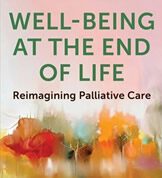
Well-Being at the End of Life: Reimagining Palliative Care
Framing death as both a social event and a human experience, not an exclusively a medical event, Julian Abel and Allan Kellehear argue in their new book, Well-Being at the End of Life: Reimagining Palliative Care, that if dying affects families, friends, neighbors, workplaces, faith communities, and civic institutions, then end-of-life care cannot belong only to professionals. They examine what has been happening historically in palliative care and hospice and invite readers to imagine how it could improve. A fascinating detailed read for any professional involved in caring for people nearing the end of their lives with the possibility for creating positive changes for all involved.
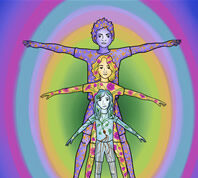
Embodied Play Therapy: Healing and Building Identity with Children
Brodsky’s Embodied Play Therapy emerges as a body-oriented, relational, sensory, and movement approach to working with children. As with any effective theoretical orientation, Brodsky provides a framework for his model, calling it the Four Pillars: Movement, Breathing, Feeling, and Playing.The book's theme underscores the need for children to have space and embodied movement for healthy psychic development. Brodsky highlights the reality of our culture of isolation, which he refers to as an “epidemic of emptiness,” as our children face increasing expectations for behavior and performance. The nervous system adapts and develops strategies to shut down and override the demands of our disembodied culture. As a Dynamic Play therapist, I found this book valuable for its illustrative, detailed approach to working with children in play.
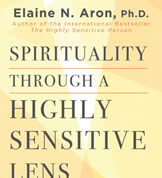
Spirituality Through a Highly Sensitive Lens: An Objective Look at Meditation Methods and Enlightenment
In Elaine N Aron’s new book, Spirituality Through a Highly Sensitive Lens, readers will gain objective insight into meditation models, with a historical foundation, and enlightenment, looking at both Eastern and Western perspectives. While Aron doesn’t focus specifically on HSPs, she does spend time addressing their needs directly within each chapter.